
Staff Turnover Is Inevitable. Fundraising Systems Are Not Optional.
You know what almost every nonprofit leader fears?
Staff turnover.
Not just because hiring is hard, but because so much institutional knowledge, history, and relationship context lives inside people’s heads. When someone leaves, it can feel like the organization takes ten steps backward before it can move forward again.
But it shouldn’t work that way.
In philanthropy, turnover isn’t an anomaly—it’s a reality. Average tenure is often measured in months, not years. There are many reasons for that, and plenty of debate about how to fix it. But regardless of why it happens, leaders have a responsibility to plan for it.
Major gift fundraising, in particular, cannot live solely inside the relationship between one staff member and one donor.
A relationship manager isn’t the relationship. They are the connector—the bridge to leadership, to artists, to programs, to the mission itself. When that person leaves, donors should feel confident that the organization hasn’t changed, only their point of contact.
The same principle applies behind the scenes.
If the operations-focused staff member—the person who holds the systems and timelines together—were to leave, the expectation should be this: the system holds. Someone new can be hired, onboarded, and brought up to speed without everything grinding to a halt.
The solution isn’t doing whatever it takes to keep someone in their role out of fear.
And it isn’t treating staff as interchangeable or disposable.
The solution is building fundraising systems designed to survive change.
So what does that actually mean in practice?
It means having clarity around things that are too often left implicit:
Clearly defined giving levels
Increasing impact or engagement at each higher level
Clear distinctions between annual, mid-level, and major donors
Scaled engagement strategies appropriate to each group
A current, shared case for support that the whole team can articulate
Portfolio assignments grounded in objective rules, not gut feelings
Nonprofit professionals are some of the most committed, values-driven people I know. They care deeply. They work hard. And they are also human. Life happens. Careers evolve. People move on.
You can build major gift systems that allow donor revenue to grow—even as staff transitions occur. The specifics look different for every organization, but resilience doesn’t happen by accident. It’s designed.
Helping nonprofits build systems that can weather turnover—without losing momentum or trust—is one of my favorite parts of this work.
Before I wrap up, here’s a small, personal example.
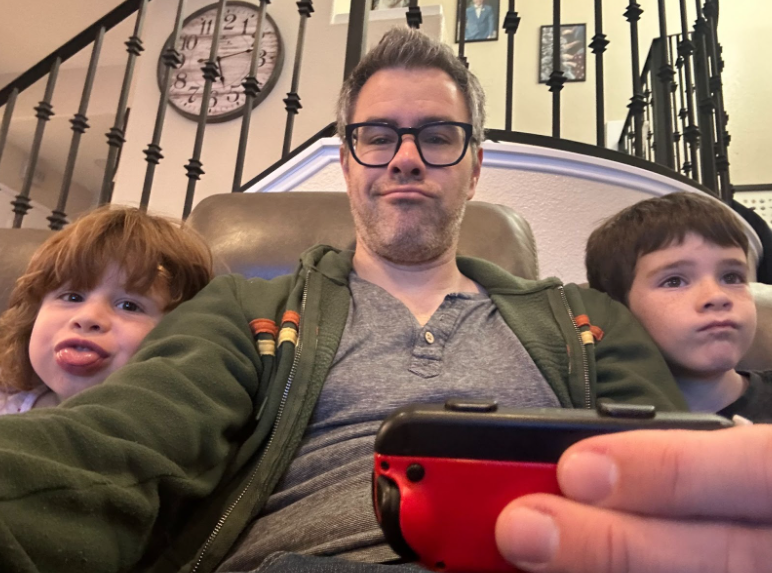
This photo is from a recent family game night. It’s a simple ritual in our house, but it works because it doesn’t depend on any one person showing up with perfect energy, patience, or enthusiasm. The structure holds, even when the players don’t (not gonna name any names…).
In other words, it’s a system built to survive bad days, changing moods, and the eventual realization that Dad is not, in fact, cool.
That’s the kind of resilience our fundraising systems need too—not perfection, but continuity. Something steady enough to hold relationships and momentum, even as people change.