
What 2025 Taught Me About Major Gifts, Focus, and Fundraising Resilience
Lessons from a year navigating fundraising amid uncertainty.
One year ago, I left my full-time role at The Old Globe and stepped into a new chapter: working alongside nonprofit leaders to strengthen their fundraising from the inside out.
Like most entrepreneurial journeys, it hasn’t been smooth. There have been moments of doubt, recalibration, and learning on the fly. But nothing has brought me more clarity—or joy—than watching a nonprofit leader have that lightbulb moment:
“Oh. This doesn’t have to feel this hard.”
Access, not aptitude, is the real gap
Large institutions accumulate fundraising knowledge through decades of experience, systems, staff turnover, and (often expensive) mistakes. Small and mid-sized organizations aren’t less capable—they’ve simply never had that knowledge installed.
That gap—between what exists and what’s accessible—has become the heart of Coastal Nonprofit Consulting’s work.
Our backgrounds in large, complex arts organizations equipped us with proven strategies, repeatable systems, and clear processes. When adapted thoughtfully, those same tools help smaller organizations increase contributed revenue, sharpen focus, and replace constant urgency with confidence that time and energy are being spent where they matter most.
Patterns from 20+ organizations in 2025
In 2025, we had the privilege of working with more than 20 organizations led by bold, mission-driven leaders in San Diego and beyond. Across very different missions and models, several patterns consistently emerged:
Major gifts are more important than ever
Federal funding cuts in 2025 exposed a hard truth: organizations overly reliant on a single revenue source were the most vulnerable. Those that weathered the disruption best had strong individual giving programs—anchored by both a broad base of supporters and a healthy mix of major donors.
In many cases, major gifts—sometimes from long-time donors, sometimes from newly engaged ones—were the difference between stability and crisis.
Donor Advised Funds became a dominant giving vehicle
Money flowing into and out of Donor Advised Funds increased dramatically. Organizations that made DAF giving easy—and stayed visible to the advisors managing those funds—consistently raised more major gifts than those who didn’t.
This wasn’t about chasing trends; it was about meeting donors where they already were.
Focus drove results
Nonprofit leaders who gained clarity about which donors deserved their limited relationship-building time saw the strongest traction. They learned to drown out inbox noise and stay centered on donors with both capacity and demonstrated interest.
The result? Deeper relationships, larger gifts, and greater long-term stability rooted in mission—not exhaustion.
Confidence followed a roadmap
Leaders with a clear, repeatable path for cultivating and soliciting major donors approached asks with confidence—and their success rates reflected it.
This is one of the most misunderstood aspects of major gifts work: confidence doesn’t come from charisma. It comes from structure, intentionality, and knowing what comes next.
Supporting leaders as they build that confidence has been one of the most rewarding parts of this work.
Diversified revenue still matters
Organizations with strong grant programs but weak individual giving ran into cash flow issues when restricted funding didn’t cover operating needs. Organizations with strong individual giving but underdeveloped grant strategies placed too much pressure on the same donors.
Long-term viability requires both sides of the equation working together—not competing for attention, but reinforcing one another.
The bigger takeaway
Looking back on 2025, one thing is increasingly clear:
Organizations without a functional major gifts strategy are becoming more vulnerable every year.
Not because they lack good intentions or passionate supporters—but because they’re trying to grow without the systems, focus, and confidence that major gifts work requires.
In 2026, we’ll be doubling down on the work of helping nonprofit leaders install the essential elements of fundraising success—turning relationship-building from a stress point into a strength, supported by systems that actually work.
If this resonates, keep an eye out here on Beyond the Ask as the work continues to take shape. I’ll be sharing what we’re learning in real time as we build and refine these approaches—what’s working, what’s not, and what nonprofit leaders should be paying attention to next.
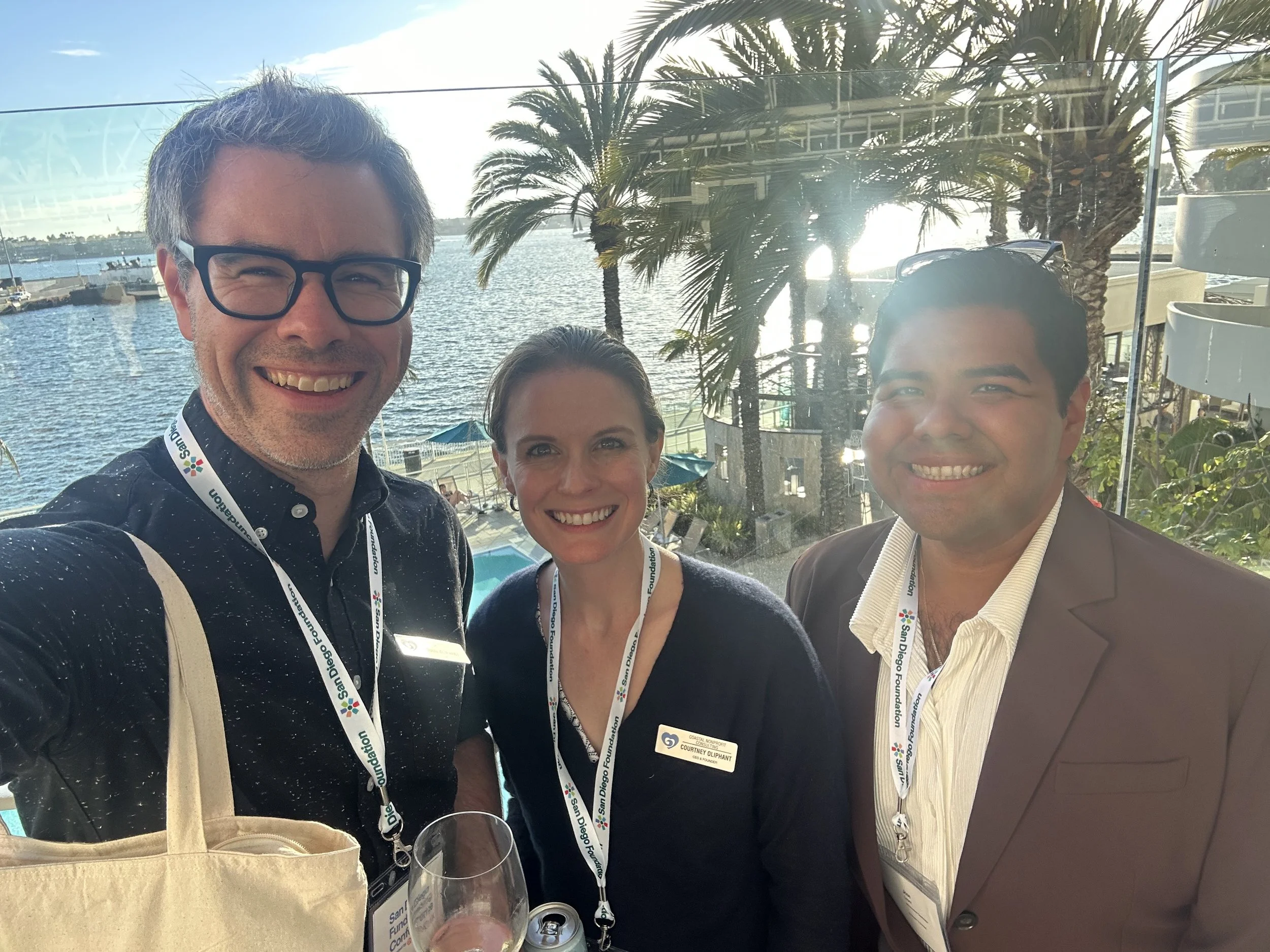
Photo from the San Diego Foundation’s 2025 Fundraising Conference, with Courtney Oliphant and Jose Lopez (Advancement Coordinator at A Reason To Survive). Much of the work we do happens in rooms like this — learning, sharing, and strengthening the people behind the missions.